
Trusted AI & AI Security
Helping organizations confidently adopt artificial intelligence through cybersecurity, governance, and risk-informed decision making.
Artificial intelligence is transforming how organizations operate—but innovation without trust introduces unacceptable risk. MOG Foundry helps clients evaluate, secure, govern, and integrate AI technologies so they can accelerate adoption while maintaining confidence, resilience, and mission assurance.

Why Trusted AI Matters
Artificial intelligence introduces new capabilities—but also new attack surfaces, governance challenges, and operational risks.
Successful AI adoption requires more than deploying models. It requires understanding how AI systems interact with people, data, infrastructure, and mission objectives while ensuring they remain secure, reliable, and trustworthy throughout their lifecycle.
Core Capabilities
-
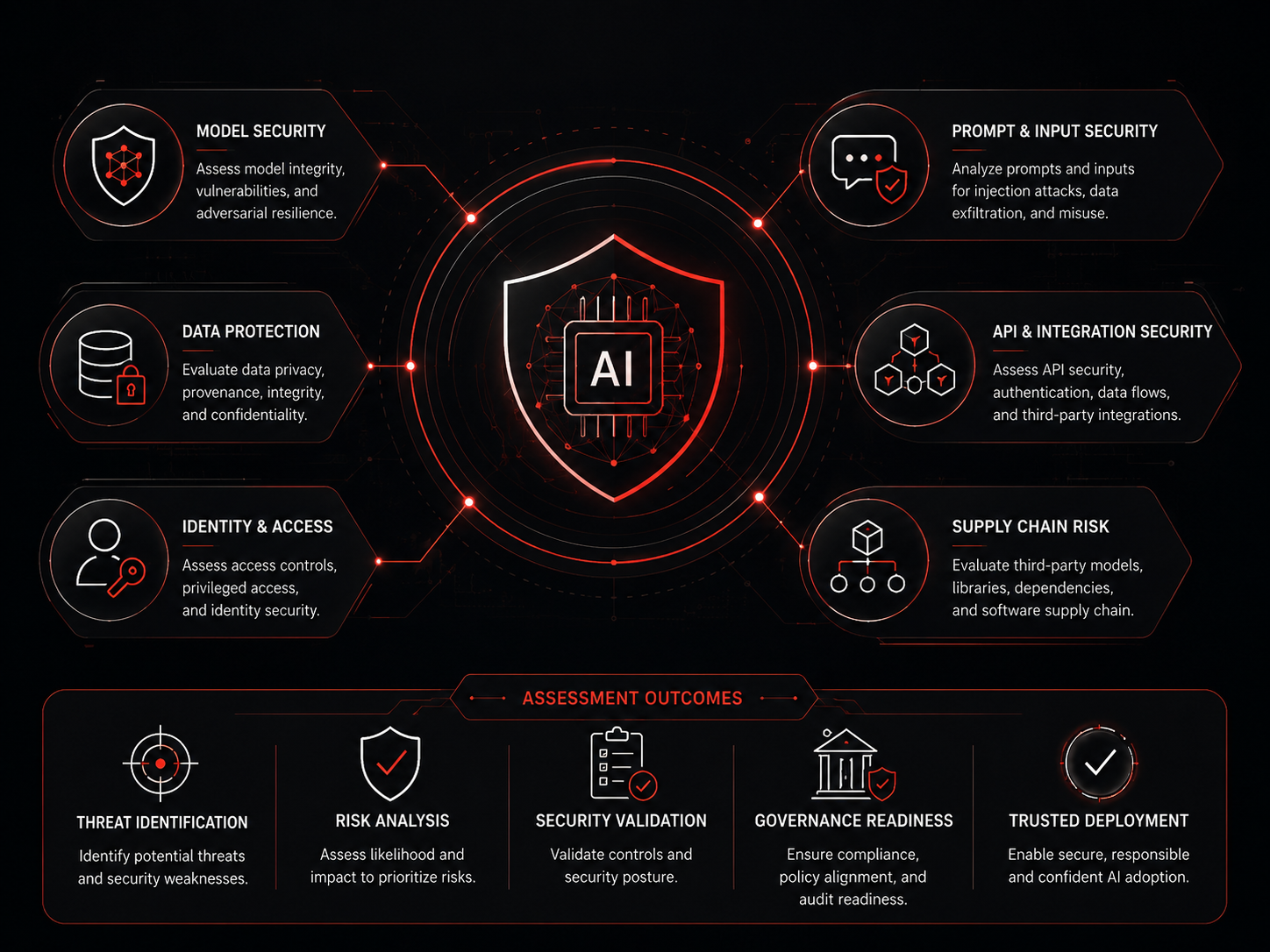
AI Security Assessments
Evaluate AI-enabled systems for security risks, attack surfaces, data exposure, integration risks, and operational impact.
-
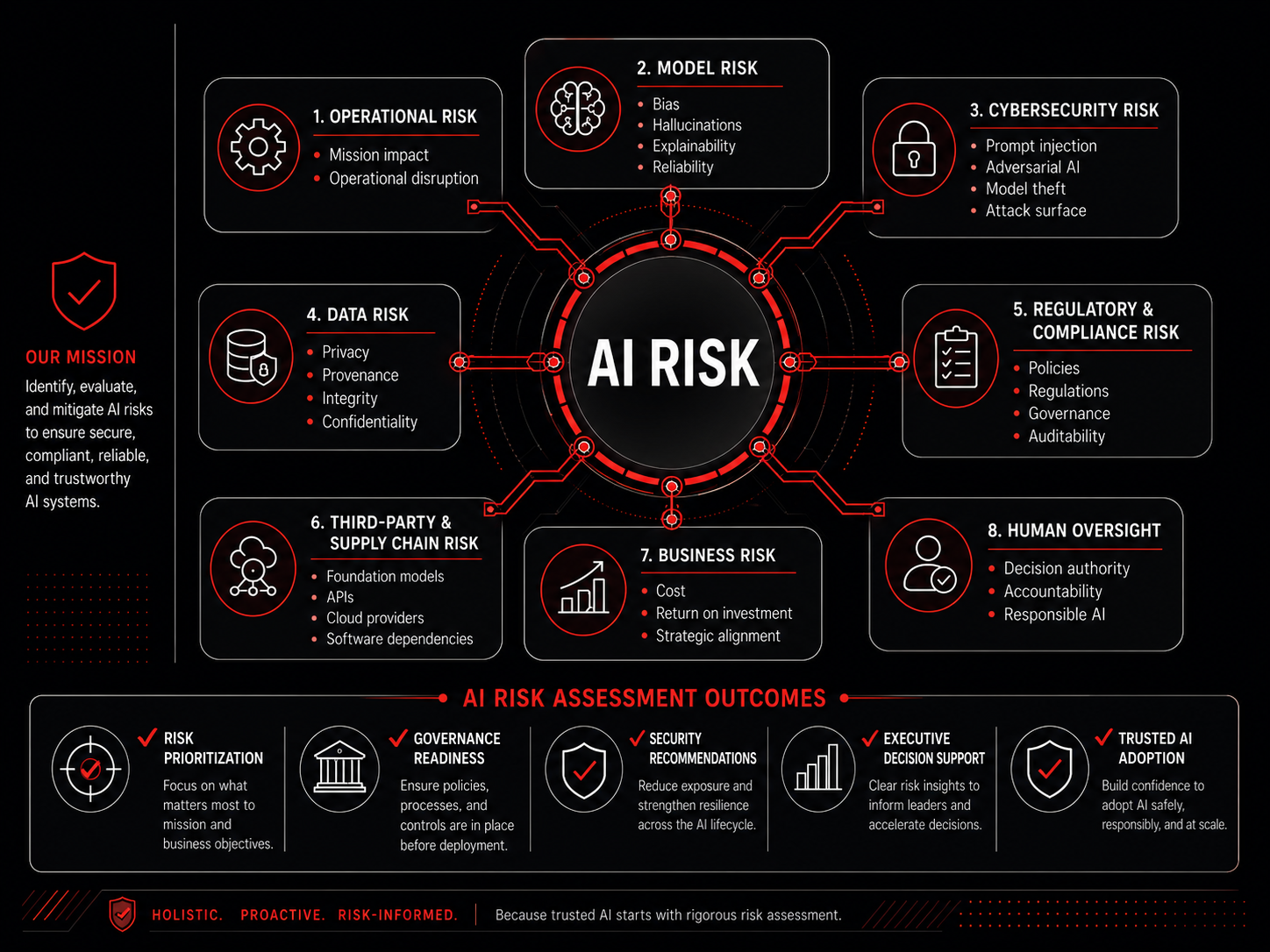
AI Risk Assessments
Identify and prioritize model, data, cybersecurity, operational, compliance, and third-party risks before adoption.
-
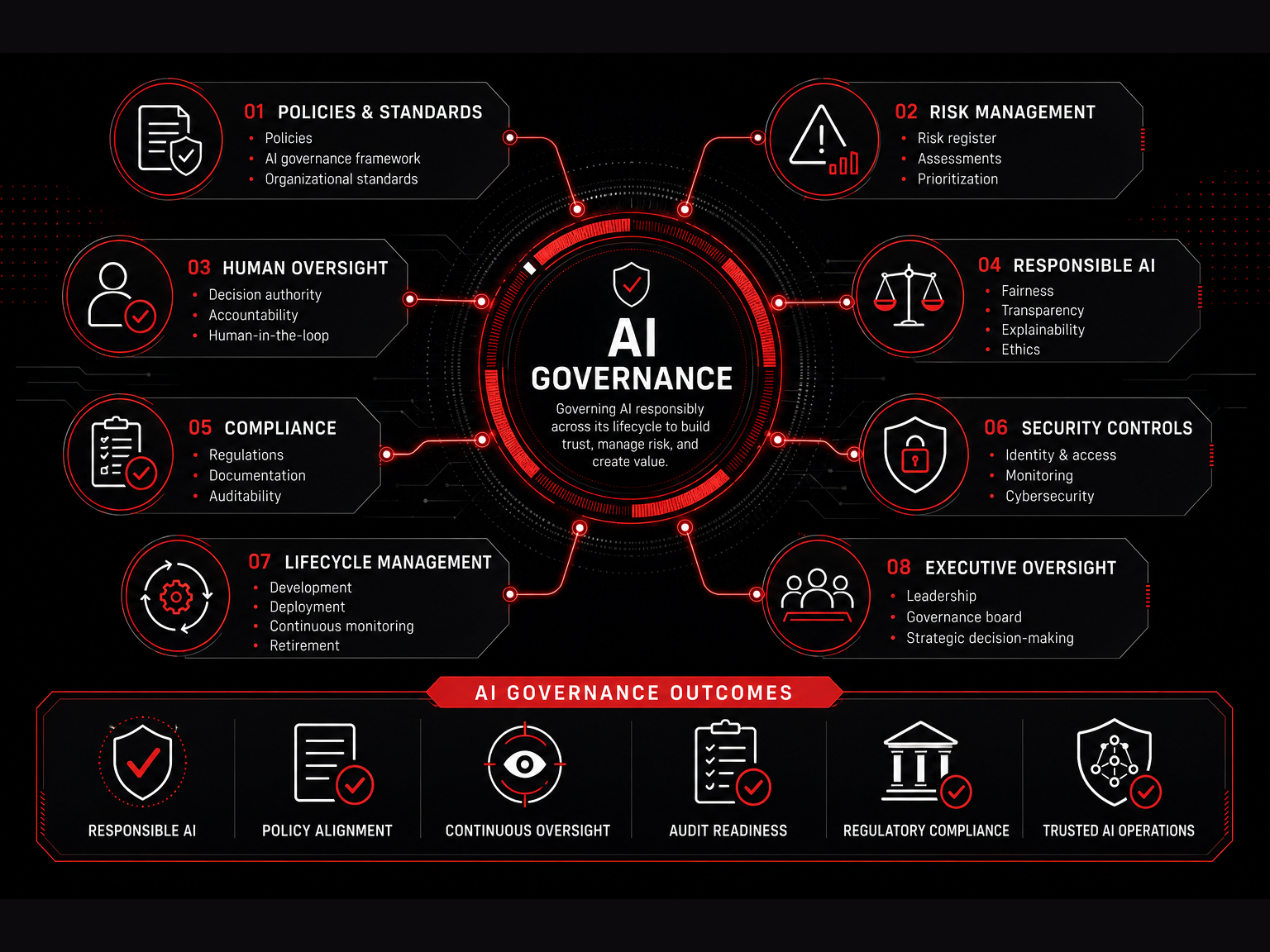
AI Governance
Establish policies, oversight, accountability, documentation, and decision rights for responsible AI adoption.
-
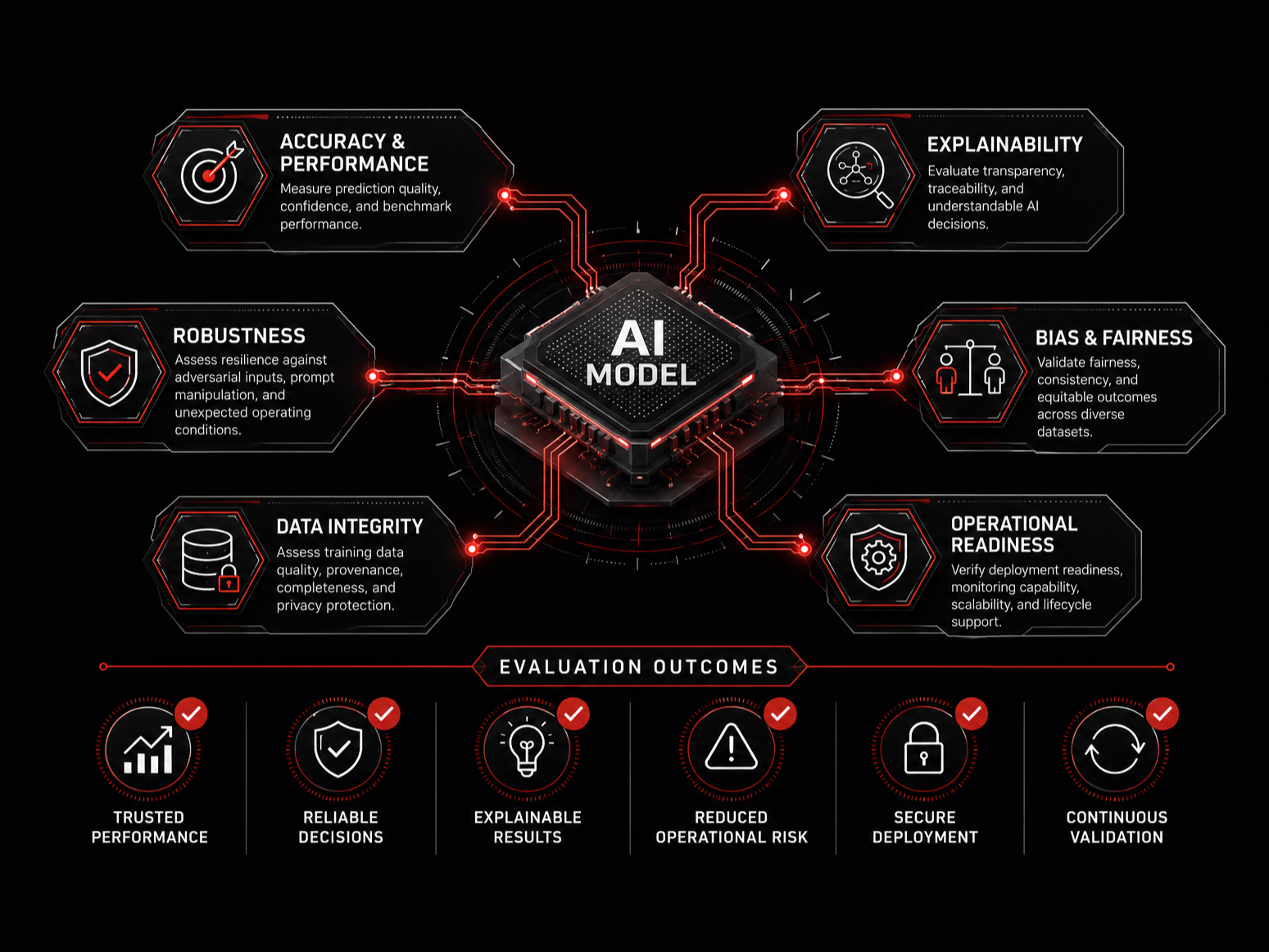
Model Evaluation
Assess model accuracy, reliability, explainability, fairness, robustness, and readiness for operational use.
-
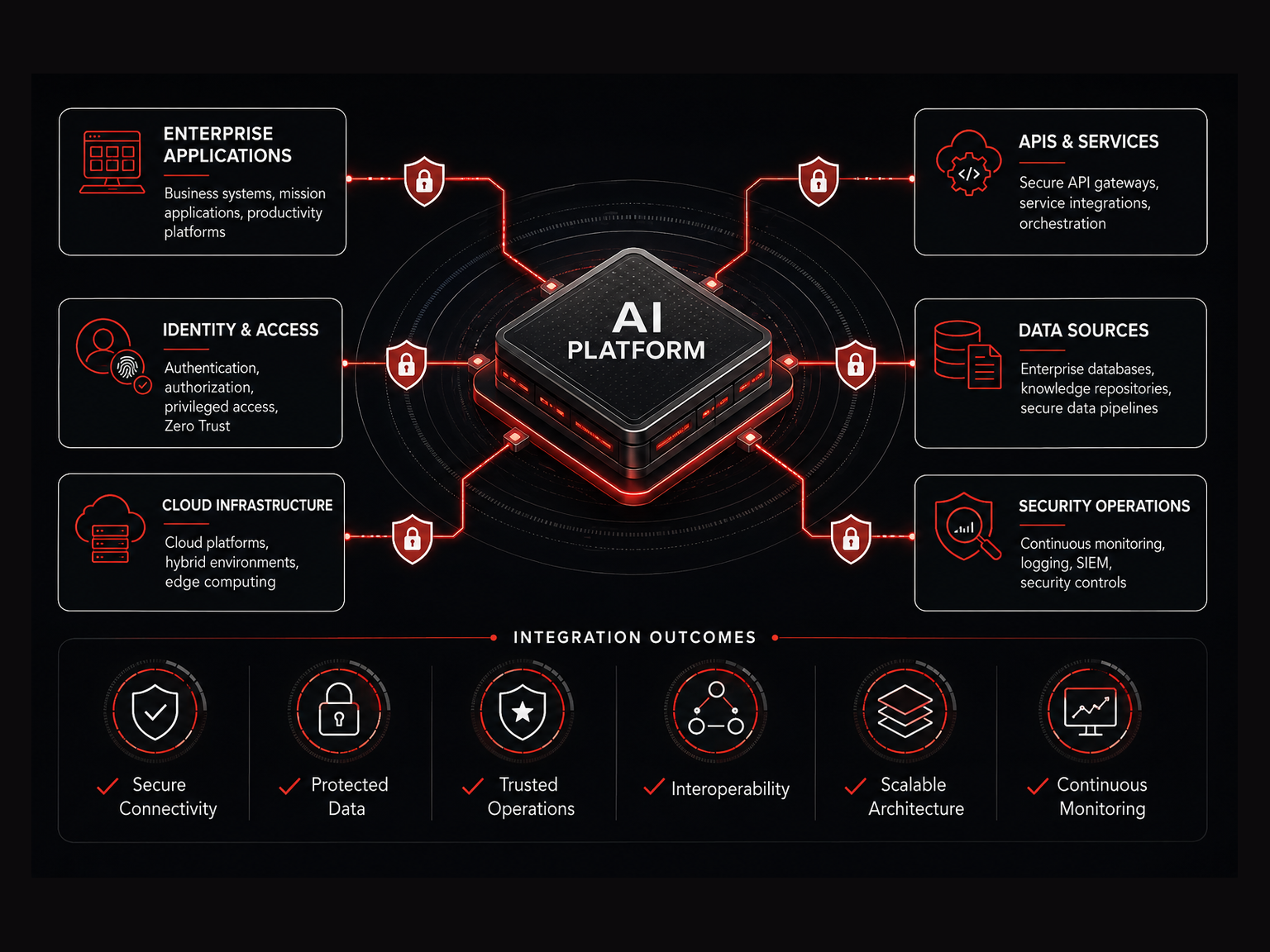
Secure AI Integration
Connect AI capabilities to enterprise applications, data, cloud platforms, identity systems, and security operations.
-
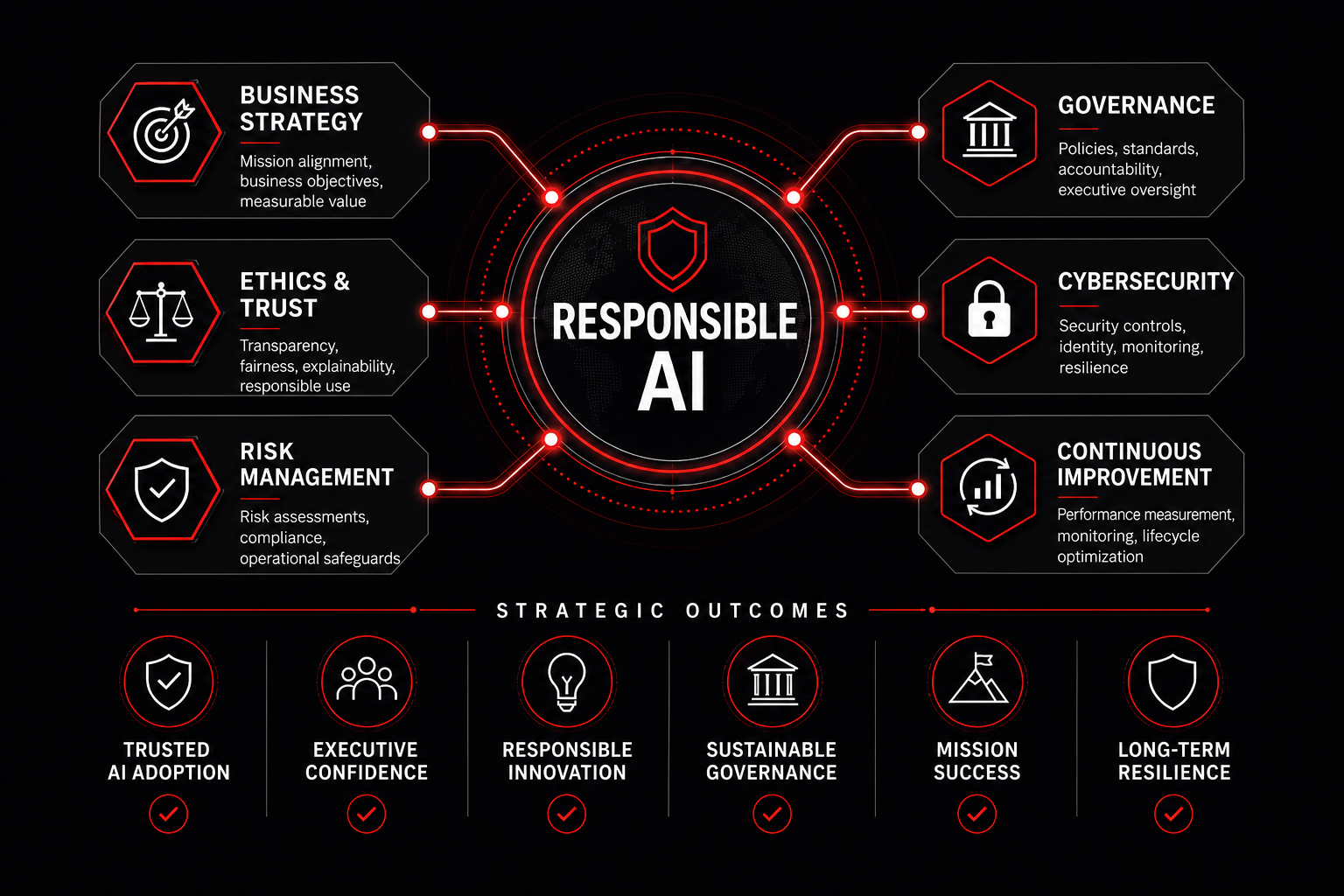
Responsible AI Strategy
Align AI adoption with business objectives, governance, cybersecurity, risk management, and mission outcomes.
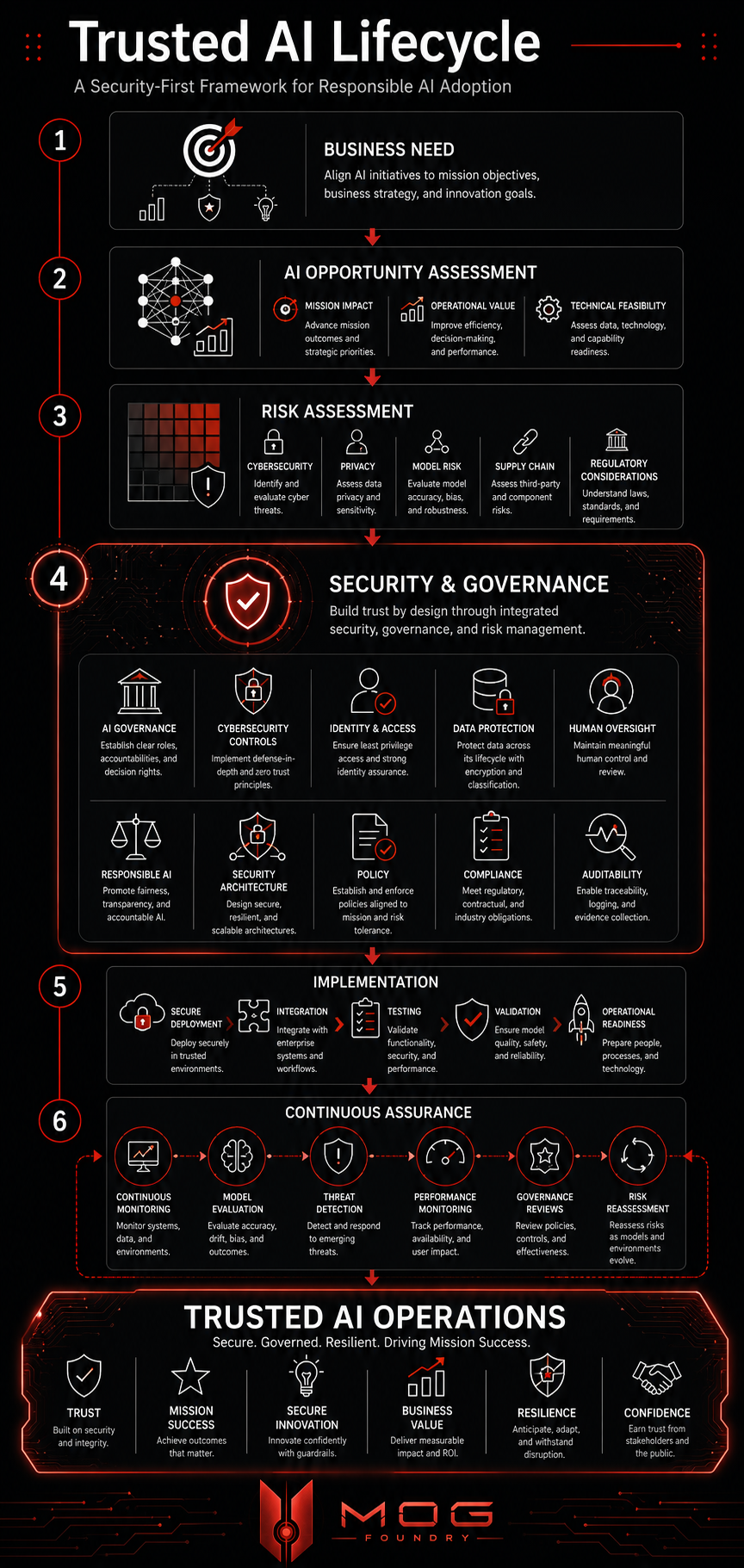
Trusted AI Lifecycle
AI adoption does not end at deployment. Trusted AI requires a lifecycle approach that connects mission needs, risk assessment, cybersecurity, governance, implementation, and continuous assurance.
MOG Foundry helps organizations move from experimentation to trusted operational use by integrating security and risk management into every stage of the AI lifecycle.
Our lifecycle approach helps organizations:
• Identify mission and business use cases
• Assess AI opportunities and risks
• Design security and governance controls
• Validate models, data, and integrations
• Deploy AI capabilities securely
• Monitor performance, risk, and trust over time
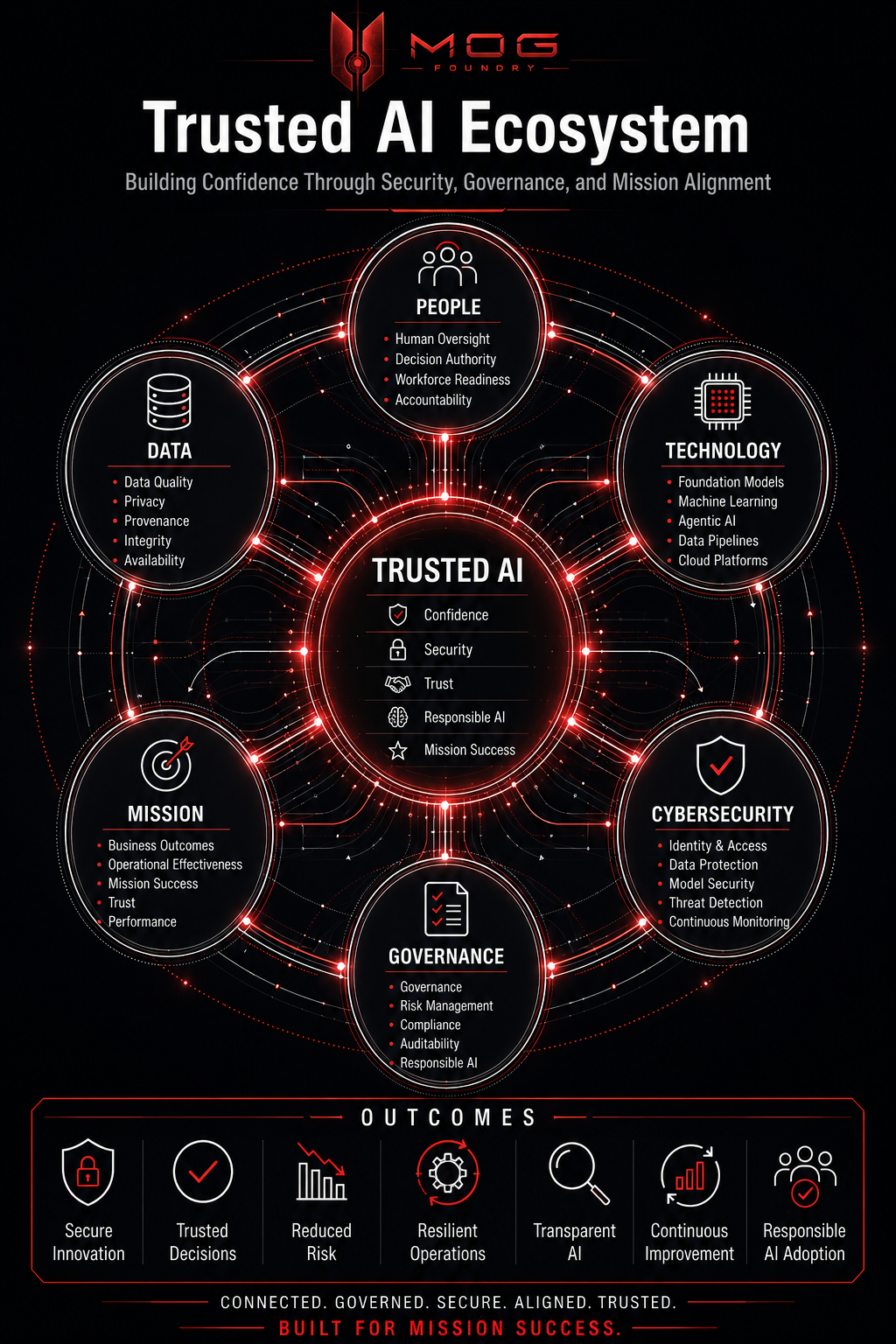
What We Evaluate Across the AI Ecosystem
Trusted AI depends on more than model performance. Organizations must understand how AI systems interact with people, data, infrastructure, cybersecurity controls, governance requirements, and mission outcomes.
MOG Foundry evaluates AI-enabled systems across the full ecosystem to identify risk, strengthen trust, and support secure adoption.

People & Oversight
Human decision authority, accountability, training, operational roles, and responsible use.
Data & Privacy
Data quality, provenance, integrity, privacy, sensitivity, access, and lifecycle protection.
Models & Applications
Model behavior, reliability, prompt security, outputs, integrations, and misuse risk.
Infrastructure & Integration
Cloud platforms, APIs, identity, access control, logging, monitoring, and system dependencies.

Cybersecurity Controls
Threat detection, data protection, secure configuration, vulnerability management, and continuous monitoring.

Governance & Compliance
Policies, standards, risk management, auditability, documentation, and responsible AI practices.

Mission & Business Impact
Operational value, performance, resilience, stakeholder trust, and mission alignment.

Supply Chain & Third Party Risk
Assessment of AI vendors, third-party tools, open-source components, model dependencies, and external service risks.
Emerging AI Technologies
AI capabilities are evolving quickly, and organizations are being asked to adopt new tools before traditional security, governance, and risk processes have fully caught up. MOG Foundry helps organizations evaluate and secure emerging AI technologies so they can move forward with confidence.
-
Security and governance for AI systems that create text, code, images, analysis, and decision-support outputs.
-
Risk assessment, security review, data protection, and governance considerations for LLM-enabled systems and applications.
-
Security boundaries, human oversight, workflow controls, and risk management for AI agents capable of taking actions across systems.
-
Secure adoption of AI assistants that support productivity, knowledge management, software development, cybersecurity, and operations.
-
Security and governance for AI systems that connect models to enterprise knowledge bases, documents, databases, and mission data.
-
Risk-informed evaluation of AI systems used to support analysis, recommendations, prioritization, and operational decision-making.
-
Security considerations for AI-enabled threat detection, vulnerability analysis, incident response, and continuous monitoring.
-
Security and governance for AI capabilities deployed outside traditional enterprise environments, including edge devices, sensors, platforms, and autonomous workflows.
As AI capabilities become more powerful and more integrated into operations, organizations need a security-first approach that enables adoption while managing risk, protecting data, and maintaining trust.

Building Confidence in AI
Artificial intelligence should create opportunities—not uncertainty.
MOG Foundry helps organizations adopt AI technologies with confidence by integrating cybersecurity, governance, and risk management into every stage of the AI lifecycle.
Because trusted AI isn’t achieved after deployment—it begins before implementation.
Ready to move AI from experimentation to trusted operational use?